Eating out is supposed to feel effortless, but long waits, unclear menus, and dietary restrictions often get in the way. Orderna was created to solve that: giving users full control over their dining experience while helping restaurants serve faster and smarter.
Orderna is a multi-user restaurant web app designed to make dining seamless. Diners can browse tailored menus, filter by dietary needs, and order directly from their table or even before arriving. The app balances discovery and convenience with smooth payment and real-time communication between customers, waiters, and admins.

Balancing the Table
The hardest part was designing for multiple user roles at once. Diners needed fast, intuitive ordering; waiters needed real-time updates; admins needed oversight and menu control. On small screens, showing full menus while keeping the flow clear and checkout smooth was another challenge.
Serving Up Clarity
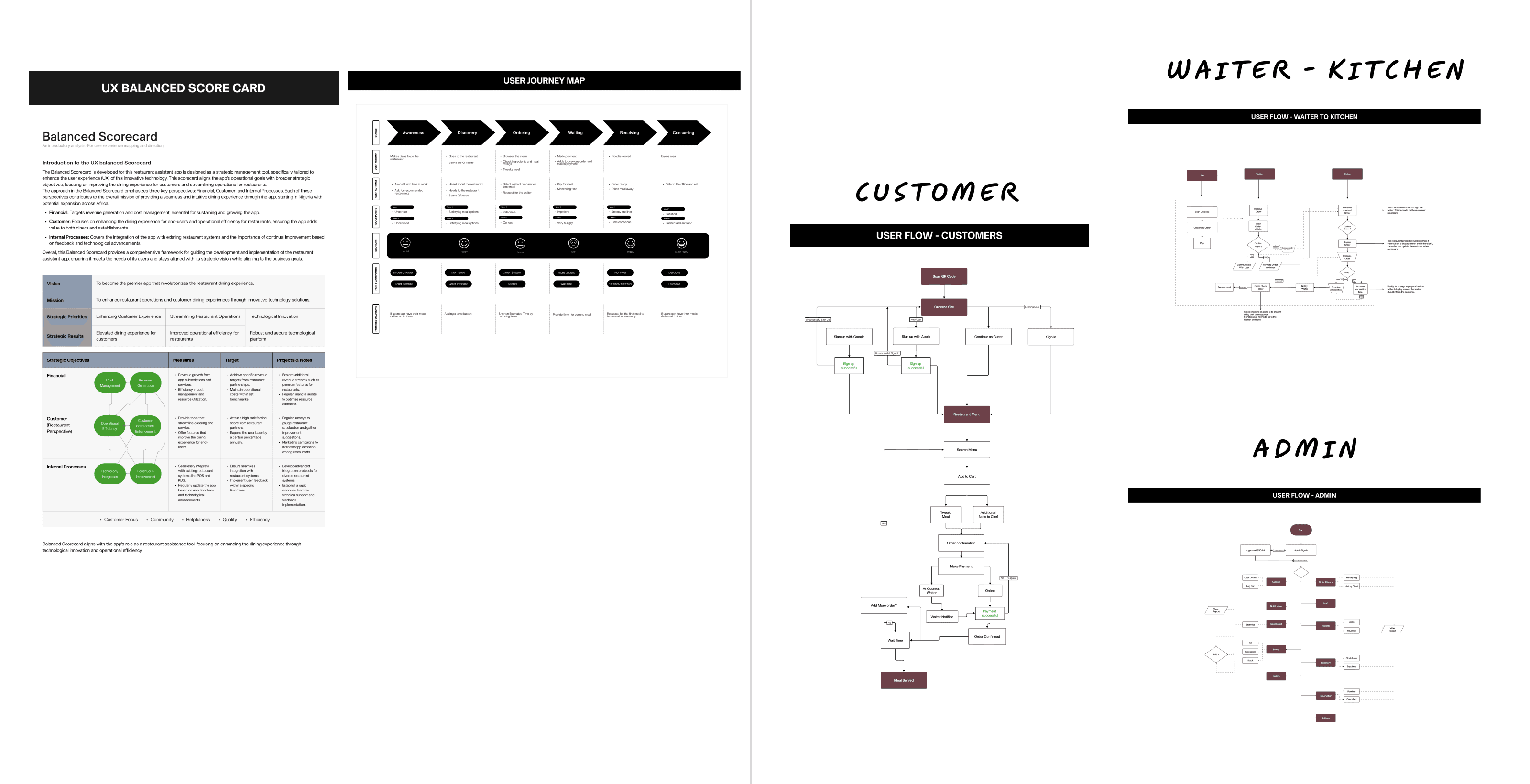
The design direction was centered on creating an ordering experience that felt fast, clear, and adaptable across all roles in the system. We broke the dining journey into four key flows browsing, ordering, preparing, and serving and designed each with usability in mind.
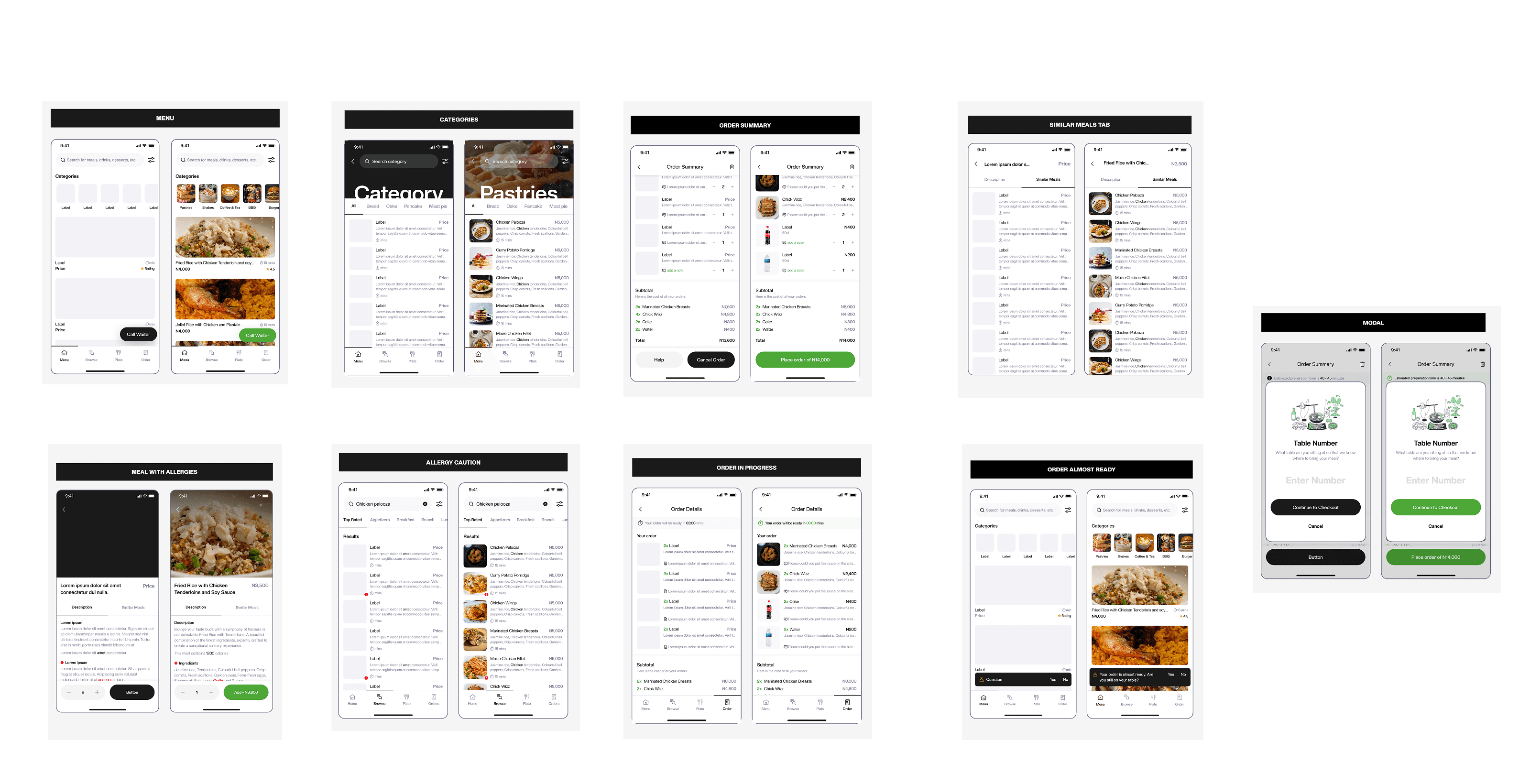
For diners, menus were structured with smart filters for allergies and dietary needs (available for both logged-in and guest users), keeping the browsing experience personal and stress-free. A mobile-first layout emphasized strong visuals and minimal clutter, while checkout was reduced to just a few steps.
For waiters and the kitchen, the priority was real-time clarity. Waiters received instant notifications for new or updated orders, while kitchen staff had a streamlined view of incoming requests, minimizing delays and miscommunication.
On the admin side, we introduced a modular design system that allowed restaurants to brand the app without breaking consistency. This also provided a clean dashboard for managing menus, staff roles, and order tracking.
Together, these design decisions created a cohesive experience for every user, while keeping the complexity hidden behind a simple, intuitive interface.
Refining the Flow
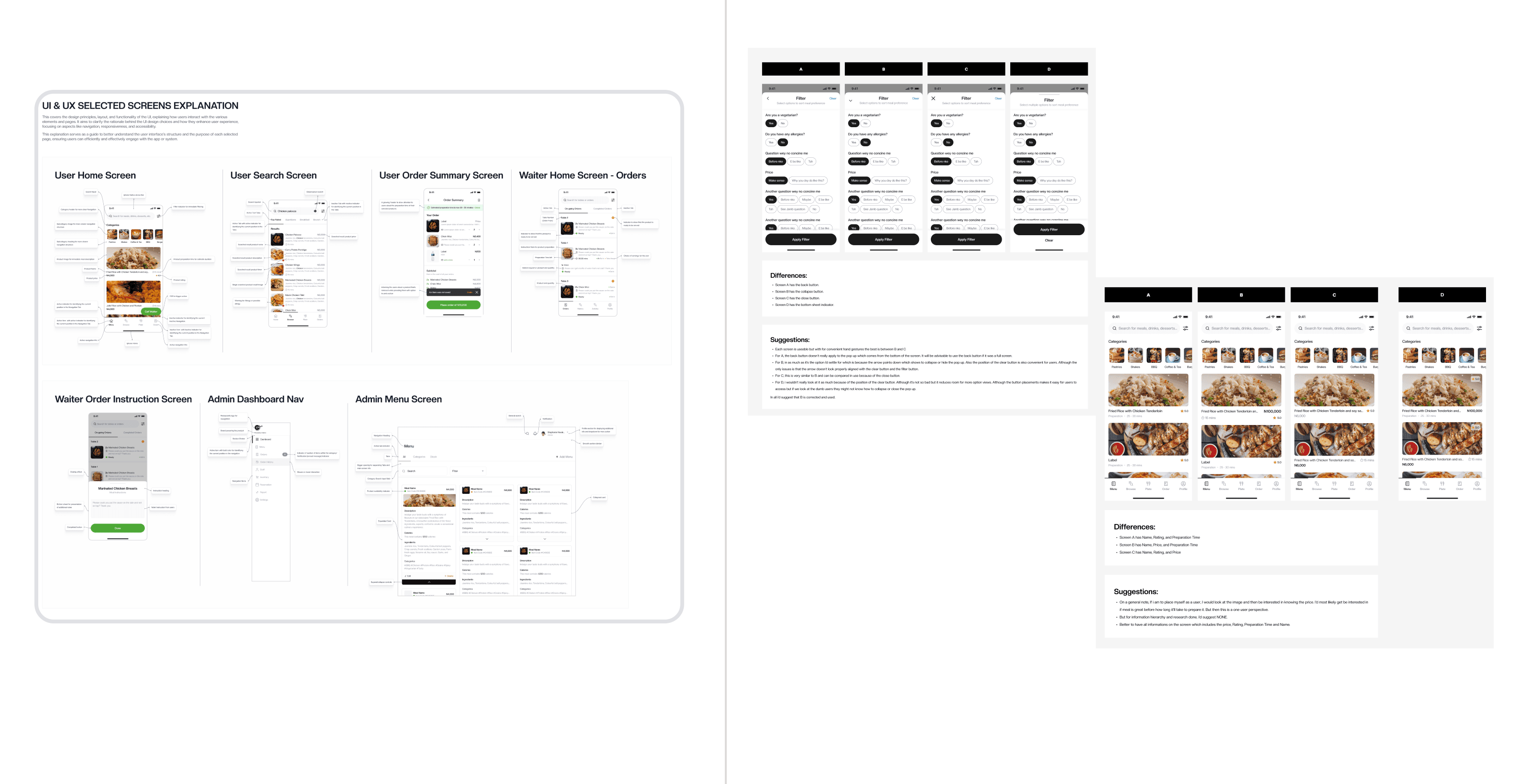
User testing revealed small but important friction points: diners wanted quicker access to filters, and some felt checkout required too many taps. On the restaurant side, kitchen staff asked for clearer order grouping during busy periods.
We iterated by surfacing filters upfront, reducing checkout to two steps, and adding a color-coded system for kitchen queues. These refinements made the experience smoother, cut order errors, and improved overall satisfaction during pilot testing.
Reflections Still on the Table
Orderna taught me that designing for multiple roles means constantly balancing clarity with complexity. Each flow, diner, waiter, kitchen, and admin came with its own challenges, but small refinements like simpler checkout and clearer kitchen queues showed how impactful thoughtful design decisions can be.
Since the product is still in development, there’s room to grow. Future iterations will explore deeper personalization for diners and advanced analytics for restaurants, ensuring the experience stays simple, scalable, and impactful.

